

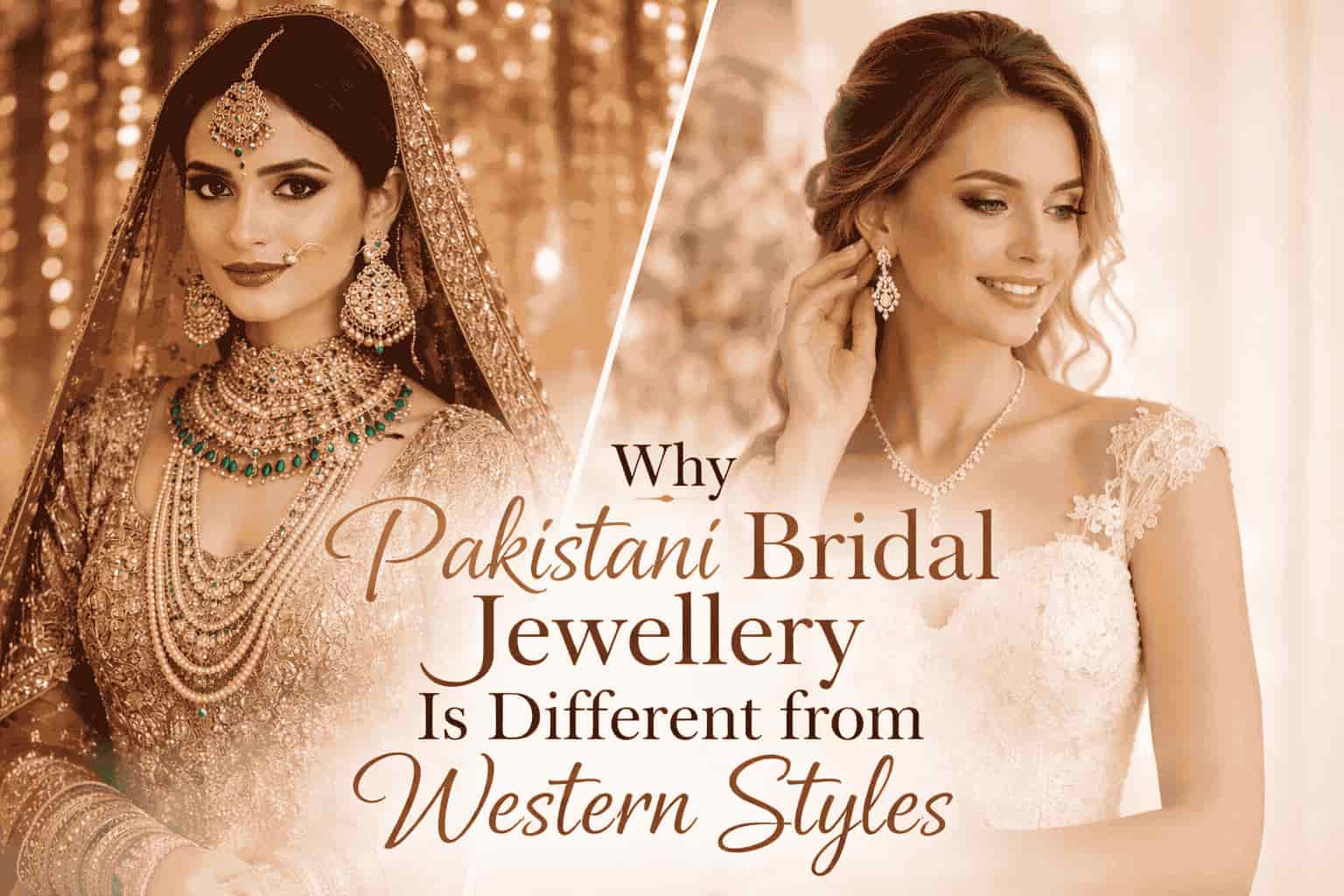
When a Pakistani bride steps into her baraat, she carries more than just gold and gemstones. She wears centuries of tradition, family blessings, and the beginning of a new chapter. Pakistani bridal jewellery isn’t just an accessory. It’s a visual language that speaks of heritage, emotion, and celebration in ways that Western bridal jewellery simply doesn’t.
If you’ve ever wondered why Pakistani brides wear layered necklaces, ornate jhumkas, and a matha patti while Western brides keep it minimal with a delicate necklace or studs, this post will walk you through the key differences and help you understand what makes Pakistani bridal jewellery so unique.
The Role of Jewellery in the Wedding
Pakistani Bridal Jewellery: A Cultural Statement
In Pakistan, bridal jewellery is non-negotiable. It’s not just about looking beautiful. It’s about honoring tradition, showing respect to your family, and stepping into marriage with symbolic adornments that have been worn by generations before you.
Each piece has meaning. The nath (nose ring) represents grace and femininity. The matha patti symbolizes the bride’s new role. Bangles are a sign of a married woman. Jhumkas and chokers complete the bridal look, making the bride feel like royalty on her big day.
Pakistani bridal jewellery is also layered and abundant. You’ll see a bride wearing a choker, a longer rani haar, earrings, a maang tikka or matha patti, bangles, and rings, all at once. It’s intentionally grand because the wedding day is seen as the most important day in a woman’s life.
Western Bridal Jewellery: Understated Elegance
Western bridal jewellery follows a different philosophy. The focus is on minimalism and letting the wedding dress shine. Most Western brides wear a simple pair of diamond or pearl studs, a delicate pendant, and maybe a bracelet. The jewellery is meant to complement, not compete with, the gown.
There’s also less cultural symbolism attached. A Western bride might choose jewellery based purely on personal taste or what matches her dress. There’s no expectation to wear family heirlooms or specific traditional pieces.
The overall aesthetic is clean, refined, and often neutral, which reflects broader Western bridal fashion trends that lean toward simplicity and timeless elegance.
Design Elements and Aesthetic Differences
Heavy, Layered, and Ornate vs. Light and Minimal
Pakistani bridal jewellery is designed to make a statement. Think intricate kundan work, polki settings, meenakari enamel, and ruby or emerald accents. Each piece is detailed, hand-crafted, and meant to be seen from across the hall.
Chokers sit high on the neck. Long rani haars cascade down the chest. Jhumkas are large and ornate, often featuring delicate bells and pearl drops. The matha patti drapes across the forehead like a crown. Bangles cover the wrists in stacks of gold, sometimes dozens at a time.
Western bridal jewellery, by contrast, is light and minimal. A thin chain with a single diamond pendant. Small stud earrings. A tennis bracelet. The goal is elegance without weight, literally and visually.
While Pakistani brides embrace boldness, Western brides lean into subtlety. Both are beautiful, but the intention behind each style is completely different.
Gold and Gemstones vs. Diamonds and Pearls
Gold is the foundation of Pakistani bridal jewellery. Whether it’s 22k gold, polki, or kundan, the warmth of gold is essential. Gemstones like rubies, emeralds, and uncut diamonds add color and richness. The combination creates a regal, traditional look that feels deeply rooted in South Asian culture.
Western bridal jewellery often centers around white gold, platinum, or silver, paired with diamonds and pearls. The palette is cooler and more neutral, designed to match the white or ivory wedding gown.
This difference in materials reflects broader cultural preferences. In Pakistan, gold represents prosperity and blessing. In the West, diamonds symbolize eternity and commitment, especially in engagement rings.
Cultural and Emotional Significance
Heirlooms and Family Legacy
In Pakistani families, bridal jewellery is often passed down through generations. A mother’s jhumkas, a grandmother’s choker, or a family nath become part of the bride’s look. These pieces carry emotional weight. They connect the bride to her lineage and remind her that she’s part of something bigger than herself.
Even when new jewellery is bought, it’s often done with the intention of creating future heirlooms. Families invest in quality pieces that can be worn again, treasured, and eventually passed to the next generation.
Western bridal jewellery is less about inheritance and more about personal choice. While some brides do wear family pieces, it’s not an expectation. Many Western brides simply choose what they like or what suits their dress.
Celebratory Abundance
Pakistani weddings are celebrations of abundance, joy, and community. The bride’s jewellery reflects that. Wearing multiple layers, bold pieces, and gemstones is part of the festive spirit. It signals happiness, prosperity, and the importance of the occasion.
Western weddings, while equally joyful, tend to focus on intimacy and personal expression. The minimalist jewellery reflects a more restrained, romantic aesthetic.
Neither approach is better. They simply reflect different cultural values around marriage, celebration, and what it means to be a bride.
Specific Pieces That Define the Pakistani Bridal Look
Jhumkas: The Iconic Bridal Earring
Jhumkas are perhaps the most recognizable piece of Pakistani bridal jewellery. These bell-shaped earrings are intricate, often featuring kundan or polki settings, pearls, and gemstone accents. They frame the face beautifully and add movement and grace to the bride’s look.
Western brides rarely wear statement earrings like jhumkas. Instead, they opt for studs or small drop earrings that stay close to the ear.
Chokers and Rani Haars: Layered Necklaces
Pakistani brides often wear two or more necklaces at once. A choker sits close to the neck, while a longer rani haar drapes elegantly below. This layering adds depth and grandeur.
Western brides typically wear just one necklace, if any. The focus is on simplicity and allowing the neckline of the dress to stand out.
Matha Patti: The Forehead Ornament
The matha patti is a delicate chain that rests on the bride’s forehead, often connected to her hair. It’s a traditional piece that adds a regal, ethereal quality to the bridal look.
This has no equivalent in Western bridal fashion. Western brides may wear a tiara or floral crown, but forehead jewellery is not part of the tradition.
Nath: The Bridal Nose Ring
The nath is a symbol of marriage in many South Asian cultures. It’s often large, ornate, and worn on the left nostril. Some naths are connected to the ear with a delicate chain.
Western brides don’t wear nose rings as part of their bridal attire. It’s simply not part of the cultural vocabulary.
Bangles: Stacks of Gold
Bangles are essential for a Pakistani bride. She may wear dozens of them, in gold or colored glass, covering her wrists and forearms. They symbolize married life and are considered auspicious.
Western brides rarely wear bangles. If they do wear a bracelet, it’s usually just one delicate piece.
Why These Differences Matter
Understanding the difference between Pakistani and Western bridal jewellery isn’t just about aesthetics. It’s about recognizing the cultural depth, emotional significance, and artistry behind each tradition.
For Pakistani brides, especially those living abroad or blending cultures, knowing these differences helps you make confident choices that honor your heritage. Whether you’re wearing your mother’s jhumkas or investing in a new bridal set from Zuha Jewellery, you’re participating in a tradition that’s rich, meaningful, and beautiful.
At Zuha Jewellery, we understand the weight of this moment. We craft pieces that honor Pakistani bridal traditions while meeting the needs of modern brides who want elegance, quality, and authenticity. From intricately designed jhumkas to timeless chokers and matha pattis, every piece is made to be part of your story.
Final Thoughts
Pakistani bridal jewellery and Western bridal jewellery come from different worlds. One celebrates abundance, heritage, and symbolic meaning. The other embraces minimalism, personal style, and understated elegance.
Both are beautiful. Both are meaningful. But if you’re a Pakistani bride, your jewellery is more than decoration. It’s a connection to your culture, your family, and your future.
Choose pieces that make you feel like yourself, honor your roots, and tell your story. Explore our complete collection of bridal jewellery sets, rings, and traditional pieces designed for the modern Pakistani bride.