925 sterling silver jewellery retains its shine longest when cleaned regularly, stored in airtight conditions, and kept away from sulphur compounds, chlorine, and moisture. The alloy, composed of 92.5% pure silver and 7.5% copper, is durable enough for daily wear but reactive enough to tarnish within days under adverse conditions. Following a structured care routine prevents oxidation, surface scratches, and discolouration across all piece types: rings, necklaces, bracelets, earrings, and bangles.
What Is 925 Sterling Silver and Why Does It Tarnish?
925 sterling silver tarnishes because the 7.5% copper content reacts with hydrogen sulphide and sulphur dioxide in the atmosphere, forming a layer of silver sulphide on the surface. Pure silver (999 fineness) is too soft for most jewellery applications, so the copper alloy is introduced to add tensile strength. The trade-off is increased oxidation susceptibility.
Tarnish accelerates in 3 specific environmental conditions:
- Relative humidity above 50%: bathrooms, swimming pools, and coastal air
- Direct contact with sulphur-rich substances: rubber bands, latex gloves, wool fabric, and certain skincare products containing sulphur or parabens
- Prolonged skin contact combined with sweat: sweat contains chloride ions that corrode the copper component
A study published by the International Journal of Electrochemical Science confirmed that silver sulphide formation begins within 24 hours of exposure to unfiltered indoor air at 60% relative humidity. This is particularly relevant for everyday pieces like 925 silver rings and pendant necklaces that sit directly against the skin for extended periods.
How to Clean 925 Sterling Silver Jewellery at Home
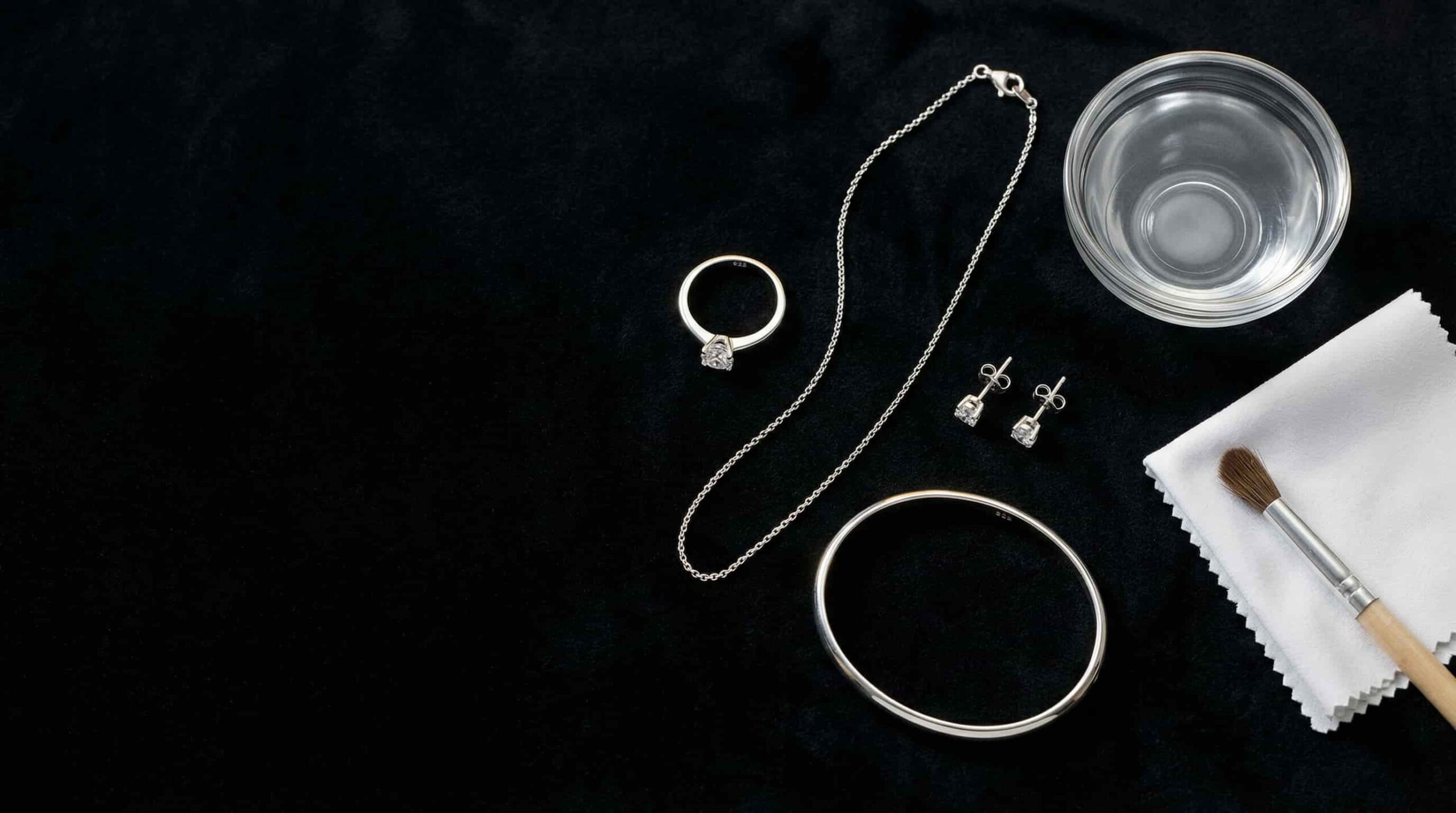
925 sterling silver jewellery at home cleans effectively using 3 methods: a microfibre polishing cloth for light tarnish, lukewarm water with 2–3 drops of phosphate-free dish soap for moderate buildup, and a baking soda paste for heavy oxidation.
Method 1: Polishing Cloth (Light Tarnish)
A lint-free silver polishing cloth, such as those treated with anti-tarnish compounds like zinc oxide, removes surface oxidation without abrasion. Rub the cloth in straight, linear strokes along the grain of the metal. Circular motions create micro-scratches visible under direct light. This method works well on smooth-surfaced pieces such as bangles and flat-band rings.
Method 2: Dish Soap and Lukewarm Water (Moderate Tarnish)
- Fill a bowl with lukewarm water (not hot, heat accelerates oxidation of copper).
- Add 2–3 drops of phosphate-free dish soap.
- Submerge the piece for 5–10 minutes.
- Scrub gently with a soft-bristle toothbrush (0.01mm bristle diameter or softer) for intricate areas, chains, and settings.
- Rinse under clean running water for 30 seconds.
- Pat dry immediately with a lint-free cloth. Air-drying leaves water spots that promote further tarnish.
Method 3: Baking Soda Paste (Heavy Tarnish)
Mix 1 teaspoon of baking soda with 2 teaspoons of water to form a thick paste. Apply with a soft cloth to tarnished areas, leave for 2 minutes, then rinse thoroughly. Do not use baking soda on pieces with gemstone settings, including turquoise, pearl, malachite, and amber, because the alkaline pH (approximately 8.3) damages porous stones. For pieces featuring zircon stones, such as Zuha’s zircon bridal sets, use the dish soap method instead.
Avoid these 4 cleaning agents entirely: bleach, acetone, toothpaste (abrasive RDA rating above 70), and commercial silver-dip solutions used for longer than 10 seconds. All four strip the anti-tarnish coating applied by most manufacturers.
How to Store 925 Sterling Silver Jewellery Correctly
925 sterling silver jewellery stores best in individual airtight compartments, separated from other metals, in a cool dry environment below 50% relative humidity. Storing pieces together causes 2 problems: galvanic corrosion where dissimilar metals touch, and physical scratching from contact with harder stones or metals.
Effective storage solutions include:
- Anti-tarnish jewellery boxes lined with Pacific Silvercloth or activated charcoal fabric, these absorb sulphur gases before they reach the metal
- Zip-lock polyethylene bags with a small silica gel packet (2–5 gram desiccant), reduces internal humidity to below 30%
- Individual fabric pouches made from non-wool, non-rubber materials, flannel and cotton are safe; wool and latex off-gas sulphur compounds
Necklaces and chains store best hanging vertically or laid flat in large individual compartments. Horizontal flat storage prevents tangling in curb chains, figaro chains, and paperclip chains. Bracelets, especially rigid styles, store best in boxes to protect their shape. Earrings store in separate airtight bags to avoid pin damage and unnecessary surface scratching.
What Substances Damage 925 Sterling Silver Jewellery?
925 sterling silver jewellery sustains the most accelerated tarnish and structural damage from 6 substance categories: chlorinated water, sulphur-based cosmetics, perfumes, household cleaning chemicals, salt water, and rubber.
Remove 925 sterling silver jewellery before:
- Swimming in chlorinated pools or salt water, chlorine reacts with copper to form copper chloride, which is irreversible without professional polishing
- Applying perfume, hairspray, or aerosol sunscreen, alcohol and propellant chemicals in these products accelerate surface oxidation by up to 30% compared to untreated silver
- Using household cleaning products, bleach (sodium hypochlorite) permanently pits sterling silver surfaces
- Exercising, sweat chloride concentration averages 40–60 mmol/L and corrodes copper within the alloy
This applies equally to delicate pieces like pendant sets with intricate stone settings and to everyday pieces like silver bangles worn on the wrist.
How Often to Clean and Polish 925 Sterling Silver Jewellery
925 sterling silver jewellery worn daily requires a light polish with a microfibre cloth once every 7 days and a full soap-and-water clean once every 30 days. Pieces worn occasionally but stored for more than 4 weeks benefit from a cleaning session before rewearing to remove passive oxidation.
A maintenance schedule by piece type:
| Piece Type | Polishing Frequency | Deep Clean Frequency |
|---|---|---|
| Rings | Every 7 days | Every 3–4 weeks |
| Necklaces/Chains | Every 5–7 days | Every 2–3 weeks |
| Bracelets | Every 7 days | Every 3–4 weeks |
| Earrings | Every 10–14 days | Every 4–6 weeks |
| Bangles | Every 7 days | Every 3–4 weeks |
Chains — including cable chains, rolo chains, and box chains — oxidise faster than flat pieces because their interlinked structure traps sweat, skin cells, and soap residue in the joints. Liquid silver polish, used in a dip-and-rinse method for 3–5 seconds, cleans chain links more effectively than a polishing cloth. Pendant necklaces with textured bezels benefit from the soft toothbrush method around the setting.
How to Remove Tarnish from 925 Sterling Silver Using Professional Methods
Professional tarnish removal from 925 sterling silver involves ultrasonic cleaning, electrochemical dip polishing, or hand-polishing by a certified goldsmith, each appropriate for a different severity of oxidation.
- Ultrasonic cleaning (light to moderate tarnish): Ultrasonic machines use 40kHz sound waves in a water-based solution to dislodge oxidation. Safe for plain sterling silver but unsafe for pieces set with pearls, emeralds, opals, or heat-treated gemstones.
- Electrochemical (electrolytic) cleaning (moderate to heavy tarnish): Submerges the piece in a sodium bicarbonate solution alongside aluminium foil. An ion exchange reaction transfers silver sulphide from the jewellery to the aluminium. Takes 5–10 minutes. Effective on heavily oxidised chains and intricate castings.
- Goldsmith re-polishing (scratches and deep patina): A certified goldsmith grinds the surface using progressively finer abrasives, then re-polishes to a mirror or matte finish depending on the original specification. Appropriate once every 3–5 years for daily-wear pieces.
If your piece is a gold-plated 925 silver item, common in bridal and statement sets, professional cleaning is especially recommended. Abrasive home methods strip the gold plating layer, which typically measures 1–3 microns thick on standard jewellery.
5 Habits That Preserve 925 Sterling Silver Jewellery Long-Term
925 sterling silver jewellery lasts longest when worn regularly, because the friction of skin contact buffs micro-oxidation before it accumulates into visible tarnish layers.
- Wear the piece daily: regular skin contact creates a natural polish effect that delays sulphide buildup.
- Apply cosmetics before putting on jewellery: perfume, moisturiser, and hairspray dry for 3–5 minutes before the metal makes contact.
- Remove jewellery before water exposure: showers, dishwashing, and swimming all count; brief daily contact with chlorinated water compounds over weeks.
- Dry pieces immediately after any moisture contact: use a lint-free cloth within 60 seconds of exposure.
- Inspect clasps and settings every 90 days: prong settings on sterling silver pieces loosen faster than gold-set equivalents because silver is softer; a loose prong is the primary cause of gemstone loss in 925 silver rings.
Investing in quality pieces from the start also reduces long-term maintenance. Zuha Jewellery’s 925 sterling silver collection includes rings, necklaces, earrings, bangles, and bridal sets, each crafted to jewellery-grade alloy standards.
Frequently Asked Questions About 925 Sterling Silver Care
Does 925 Sterling Silver Turn Skin Green?
925 sterling silver turns skin green when the copper component oxidises against sweat, producing copper chloride, a green residue that transfers to skin. This occurs more frequently in humid climates, on people with acidic sweat pH (below 5.5), and on pieces not cleaned for more than 4 weeks. Cleaning the piece removes the copper oxide layer and stops the discolouration.
Is It Safe to Wear 925 Sterling Silver in the Shower?
925 sterling silver exposed to shower water tarnishes faster because shower products, including shampoo, conditioner, and body wash, contain sulphates and fragrances that react with the copper alloy. Hard water above 200 mg/L calcium carbonate also leaves mineral deposits in chain joints and textured surfaces that accelerate corrosion. Remove all sterling silver pieces before showering.
How Long Does 925 Sterling Silver Last?
925 sterling silver jewellery, maintained with monthly cleaning and correct storage, retains structural integrity and surface finish for 20–30 years or longer. The alloy does not degrade chemically under normal conditions; tarnish is a surface phenomenon, not material deterioration. Pieces repaired and re-polished by a goldsmith as needed maintain their original form indefinitely. For bridal-quality pieces such as full bridal sets or pendant sets, professional care once every 2–3 years preserves the finish across decades of wear.