

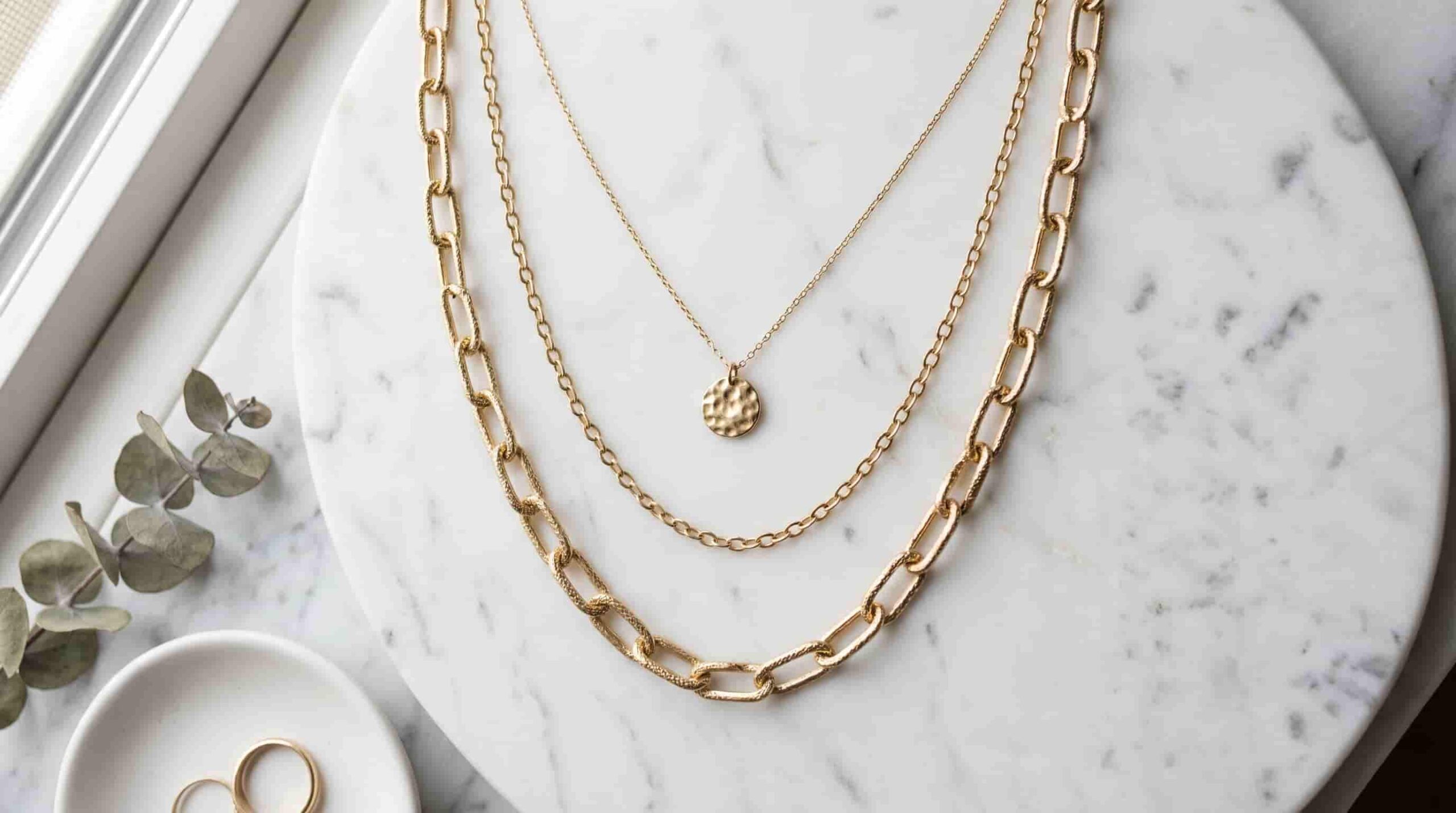
Layering necklaces the right way means choosing 3 complementary lengths, a choker at 14–16 inches, a princess chain at 17–19 inches, and a matinee pendant at 20–24 inches, and styling them to work with your neckline, your outfit’s embroidery, and whether or not you are wearing a dupatta.
For Pakistani women, this last part is the one every Western guide skips entirely.
This guide covers the 5 layering rules that actually work for shalwar kameez, Anarkali suits, lawn kurtas, and formal Pakistani wear, without the necklaces disappearing under a dupatta or clashing with a heavily embroidered gala.
Why Generic Necklace Layering Guides Don’t Work for Pakistani Women
Generic guides from Western jewelry brands are built around one outfit: a plain Western neckline, usually a V-neck or scoop neck with no scarf in sight. Pakistani fashion operates differently.
There are 3 specific challenges that change everything about how layering works:
Heavy gala embroidery on the neckline of a shalwar kameez, think zardozi, kora dabka, or mirror work, already fills the visual space where a layered necklace look would live. Adding 3 chains over dense embroidery creates visual noise, not elegance.
The dupatta physically covers the chest and often the neck, which means a beautifully layered necklace set is simply not visible most of the time.
Yellow gold preference in Pakistani jewelry culture is strong. Most Pakistani women own yellow gold pieces, not the mixed-metal collections that Western guides assume. The layering rules around metals need to reflect this reality.
Understanding these 3 challenges is what separates layering that looks deliberate from layering that looks accidental.
The 3-Length Foundation: Start Here
The single most important rule in necklace layering is length variation, and it applies equally in Lahore, Karachi, and Dubai. Three layers produce the most balanced result, one short, one mid, one long, with at least 2 inches of space between each piece so they don’t overlap or tangle.
Choker (14–16 inches): This sits right at the collarbone and acts as the anchor layer. For Pakistani women, a plain gold choker or a thin Kundan choker at this length is the strongest starting point.
It frames the face and reads well even when the dupatta is shifted.
Princess length (17–19 inches): This is the workhorse layer. A fine gold chain with a small pendant, a teardrop, a coin, or a simple meenakari charm, sits at the ideal mid-chest point. This is also the layer that benefits most from having some weight, so it doesn’t ride up and merge with the choker.
Matinee length (20–24 inches): This is the finishing layer. A longer chain with a more detailed pendant, a jhoomar-style drop, an oxidized silver pendant, or a Polki stone piece, adds depth and elongates the neckline. At this length, it stays visible even when a light dupatta is draped over one shoulder.
For a two-piece look, which is more appropriate over heavy embroidery, use only the choker and the matinee length. The gap between them does the visual work that three layers would otherwise provide.
How to Layer with a Dupatta: The Rule Everyone Ignores
A dupatta changes the layering equation completely, and there are 3 practical approaches that actually work:
When the dupatta is draped over both shoulders (the classic drape): Keep the necklace layers short, choker only, or choker plus a 17-inch chain at most. Longer layers disappear under the fabric. A single statement choker in gold or Kundan reads better than a three-piece stack that no one can see.
When the dupatta is pinned over one shoulder: This is the most necklace-friendly dupatta style. One side of the chest is exposed, and a 3-piece layered stack at 14, 18, and 22 inches sits beautifully in that open space. This is the occasion to wear the full layered look.
When the dupatta is worn on the head (as on Eid or at a nikah): The neckline is fully visible. This is where a layered set of 2–3 gold or Polki pieces works at its best. Keep the layers delicate, heavy statement necklaces alongside a formal dupatta create a cluttered look rather than an elevated one.
The practical rule: before putting on necklaces, decide how the dupatta will sit. The dupatta position determines the necklace choice, not the other way around.
Matching Layering to Pakistani Necklines
Pakistani kameez necklines fall into 5 common styles, and each one calls for a different layering approach:
Gol gala (round neck): A 16-inch choker sits just inside the neckline, and a 19-inch pendant chain fills the space below it cleanly. Two layers are enough here.
V-neck kameez: The V shape creates a natural canvas for necklace layering. A thin gold choker along the top of the V, with a longer pendant chain following the angle down, creates a pulled-together look. Three layers work well on a deep V.
Boat neck (kashti): The wide, shallow neckline suits a single long necklace at 20–22 inches more than stacked chokers. A layered look on a boat neck tends to bunch at the center. A single long chain or a single statement piece works better.
High collar or mandarin neck kurta: Place necklaces over the collar, not inside it. A 20-inch chain worn over a high collar looks intentional. A choker inside a high collar disappears. This is a common mistake.
Anarkali neckline (often with heavy embroidery): Skip layering entirely when the gala is heavily embroidered. One delicate gold chain at 22–24 inches, worn below the embroidery zone, is the right call. Competing with the embroidery adds clutter.
Gold, Oxidized Silver, and What Actually Works in Pakistani Fashion
Yellow gold is the dominant metal in Pakistani jewelry for a reason, it works with warm undertones, it reads beautifully against deep jewel-toned fabrics like bottle green, maroon, royal blue, and mustard, and it carries cultural weight at occasions like Eid, shaadi, and mehendi.
3 metal combinations that actually work for Pakistani layering:
Yellow gold on yellow gold: Different chain styles in the same metal, a flat curb chain, a rope chain, and a box chain, create texture variation without metal mixing. This is the easiest approach and the most versatile.
Yellow gold with oxidized silver: This combination pairs well with casual lawn suits and Western-style fusion outfits. A gold choker with an oxidized silver pendant chain adds dimension without looking overly traditional or overly modern.
Yellow gold with Polki or Kundan: For formal occasions, weddings, Eid, mehndi, layering a plain gold chain with a Kundan or Polki pendant piece adds traditional jewelry credibility. This is the elevated version of the 2-piece stack.
Avoid mixing rose gold with yellow gold in Pakistani styling contexts. The warm-pink undertone of rose gold clashes with the deep saturated colors common in Pakistani fabric prints and embroidery.
Occasion-Based Layering for Pakistani Women
Daily lawn suit (casual): One or two delicate gold chains. A thin choker and a 19-inch pendant chain is enough. Minimal, clean, and easy to wear.
Office wear: A single 18-inch pendant chain in gold or a plain gold choker. Layering more than 2 pieces in a professional setting reads as overdressed against the relatively simple silhouette of office shalwar kameez.
Eid outfit: A 3-piece layered set in yellow gold, choker, princess chain, and a matinee pendant, worn without a dupatta covering the chest. This is the occasion where the full layered look makes the most sense.
Wedding guest (formal): A 2-piece Kundan or Polki stack. A statement Kundan choker at 15 inches and a longer pendant piece at 22 inches. Keep the metals consistent and the lengths dramatic for a formal effect.
Mehndi (as a guest): This is the most experimental occasion. Bold layering with colored stone pendants, jhoomar-inspired drops, and beaded chains alongside a plain gold piece works here. 3–4 layers are acceptable on a mehndi because the context is celebratory and informal.
3 Mistakes Pakistani Women Make When Layering Necklaces
Layering over heavy embroidery: Zardozi, dabka, and mirror-work necklines already carry visual weight. Adding necklaces on top of a heavily embroidered gala creates a cluttered look. On embroidered outfits, choose one subtle chain or skip necklaces entirely and let the embroidery work alone.
Ignoring the dupatta position: Layering a 3-piece necklace stack and then throwing a dupatta over both shoulders wastes the entire layered look. Decide the dupatta drape first, then choose necklaces that are visible in that drape position.
Wearing same-length chains: Two chains at 18 inches will tangle within 20 minutes and merge into one visual layer instead of two. Always maintain at least 2 inches of length difference between each piece. Necklace extenders, small gold-toned chain extensions, are the simplest fix for chains that sit too close together.
Necklace layering for Pakistani women is not complicated once the right variables are accounted for. Length variation, dupatta awareness, neckline matching, and metal consistency are the 4 rules that produce a layered look that feels deliberate, polished, and grounded in Pakistani fashion rather than imported from somewhere else.